
select your Language
News & Media
Stay updated with the latest ESG trends, insights, and company news.

EUDR: European Commission Confirms No Further Delay
The EU Deforestation Regulation (EUDR) has already been postponed twice since its adoption: once in December 2024, and again in December 2025. As of August 2026, however, the European Commission has confirmed there will be no further postponement, with the current compliance dates remaining in place.

Listed Companies in Thailand: How Far Has SEC Thailand's ISSB Roadmap Progressed?
For companies listed on the Stock Exchange of Thailand (SET), the Securities and Exchange Commission (SEC) is rolling out a plan to bring ISSB standards (IFRS S1 and IFRS S2) into mandatory disclosure requirements, known as the "ISSB Roadmap." Unlike Malaysia (a unified national policy framework) or Singapore (embedded within exchange listing rules), Thailand is taking the approach of gradually upgrading an existing ESG disclosure regime. This article summarizes the latest roadmap, as revised by SEC Thailand in November 2025.

Listed Companies in Malaysia: How Far Has the National Sustainability Reporting Framework (NSRF) Progressed?
For companies listed on Bursa Malaysia, Malaysia is now the first ASEAN economy to mandate ISSB-aligned sustainability disclosures at a national level, through the National Sustainability Reporting Framework (NSRF). Unlike Vietnam's approach (multiple scattered legal documents) or Singapore's approach (embedded solely within the exchange's own listing rules), Malaysia has built a unified national policy framework, led by the Securities Commission Malaysia (SC) in coordination with Bank Negara Malaysia, Bursa Malaysia, and the Audit Oversight Board. This article summarizes the latest implementation roadmap to help listed companies understand exactly where their obligations stand.

Only 35 days left until Decision No. 42/2026/QD-TTg officially takes effect: Is your business on the list of facilities required to conduct a GHG inventory?
Decision No. 42/2026/QD-TTg is set to take effect in 35 days, on September 25, 2026, updating Vietnam's List of Sectors and Facilities Required to Conduct Greenhouse Gas (GHG) Inventories and replacing Decision No. 13/2024/QD-TTg. Businesses in the industrial, energy, construction, and transportation sectors are being urged to check whether their facilities fall under the newly updated list.

Listed Companies in Singapore: How Far Has the Mandatory ISSB Climate Disclosure Roadmap Progressed?
For companies listed on the Singapore Exchange (SGX), the mandatory climate disclosure framework is no longer something on the horizon, it is already in effect. Unlike Vietnam's approach of layering requirements across multiple pieces of legislation, Singapore has taken the path of embedding ISSB-aligned climate disclosure requirements directly into the SGX Listing Rules, jointly developed and updated by Singapore Exchange Regulation (SGX RegCo) and the Accounting and Corporate Regulatory Authority (ACRA). This article summarizes the latest roadmap, updated by ACRA and SGX RegCo in August 2025, to help listed companies understand exactly where their obligations stand.

Listed Companies in Vietnam: How the 2026 ESG Disclosure Roadmap Is Tightening
For companies listed on HOSE or HNX, 2026 marks a turning point: ESG reporting is no longer a voluntary, formality-driven document, but is steadily becoming a mandatory obligation under a clear legal roadmap. This article summarizes the latest updates on ESG disclosure requirements in Vietnam, helping listed companies understand exactly where they stand in the compliance timeline and what to prepare for next.
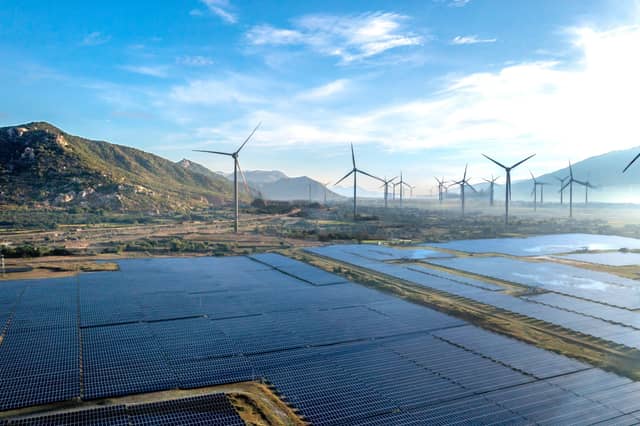
Vietnam Targets a 10% Green Economy Contribution to GDP: How Should Businesses Prepare for the ESG Turning Point?
In late July 2026, the 3rd Plenum of the 14th Central Committee officially implemented Conclusion No. 75-KL/TW, allocating a minimum of 2% of the annual total state budget expenditure for environmental protection in the 2026-2030 period. This massive public resource not only serves as a catalyst to mobilize additional global green financial flows but also sends a clear message to the business community: the green transition has officially become a mandatory condition for survival.

4-Step Roadmap for Businesses to Move from Manual ESG Reporting to Automated Software
Every ESG reporting cycle, countless businesses are still wrestling with dozens of Excel files, mismatched figures between departments, and mounting anxiety ahead of each audit. As international reporting standards such as GRI, IFRS, and TCFD grow increasingly stringent, shifting to automated software is no longer optional - it is now a necessity.
Let’s talk!
Receive Free ESG Assessment
Discover how you can collaborate with FTK in the dynamic landscape of South East Asia sustainability.