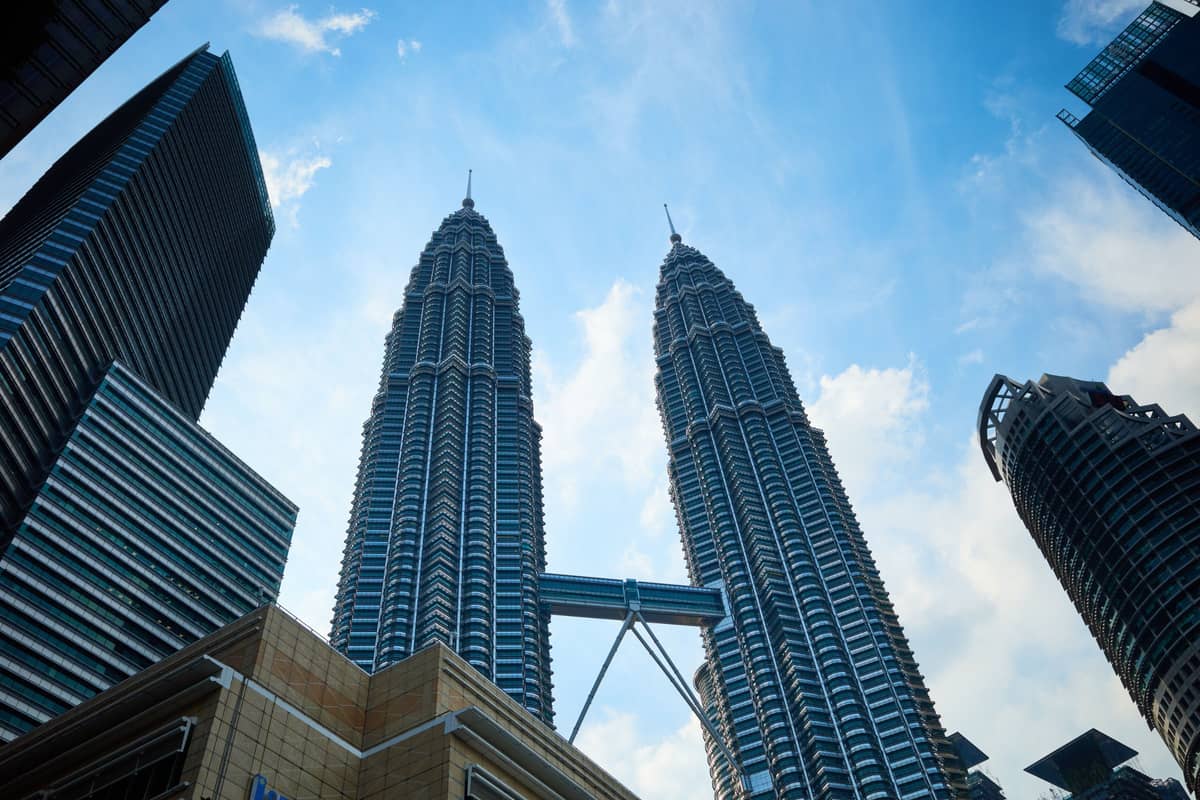
For companies listed on Bursa Malaysia, Malaysia is now the first ASEAN economy to mandate ISSB-aligned sustainability disclosures at a national level, through the National Sustainability Reporting Framework (NSRF). Unlike Vietnam's approach (multiple scattered legal documents) or Singapore's approach (embedded solely within the exchange's own listing rules), Malaysia has built a unified national policy framework, led by the Securities Commission Malaysia (SC) in coordination with Bank Negara Malaysia, Bursa Malaysia, and the Audit Oversight Board. This article summarizes the latest implementation roadmap to help listed companies understand exactly where their obligations stand.
Legal Framework: NSRF as National Policy, Operationalized Through Bursa's Listing Rules
On 24 September 2024, SC Malaysia officially launched the NSRF, adopting IFRS S1 (General Requirements for Disclosure of Sustainability-related Financial Information) and IFRS S2 (Climate-related Disclosures), issued by the ISSB, as the baseline sustainability disclosure standards for Malaysian companies. The framework builds on nearly a decade of Malaysia already requiring more basic mandatory sustainability reporting.
Subsequently, on 23 December 2024, Bursa Malaysia formally amended its Main Market and ACE Market Listing Requirements to directly embed NSRF obligations into listing requirements, replacing the earlier guidance-based approach (the 3rd Edition Sustainability Reporting Guide). This move made Malaysia the first ASEAN economy to mandate ISSB-aligned sustainability disclosures at a national level.
Implementation Timeline: Three Groups, a "Climate-First, Full Sustainability Later" Approach
The NSRF takes a phased approach, prioritizing climate-related disclosures (IFRS S2) before expanding to full sustainability disclosures (IFRS S1). Companies within scope are divided into three groups:
Group 1: Main Market-listed companies with a market capitalisation of RM2 billion and above, approximately 130 companies representing over 80% of Bursa Malaysia's total market capitalisation. IFRS S2 (climate) applies from FY2025, expanding to IFRS S1 (full sustainability) from FY2026.
Group 2: Remaining Main Market-listed companies. IFRS S2 applies from FY2026, expanding to IFRS S1 from FY2027.
Group 3: ACE Market-listed companies, together with non-listed companies with consolidated revenue of RM2 billion and above. Applies from FY2027.
Scope 3 Emissions and Transition Reliefs
The NSRF allows for deferred Scope 3 GHG emissions disclosure: deferred by 2 years for Group 1 and Group 2, and by 3 years for Group 3, relative to each group's respective start date. However, there is a notable exception: Main Market-listed companies must still disclose Scope 3 emissions related to business travel and employee commute from the outset, under Bursa's existing pre-NSRF rules.
Non-listed companies within Group 3 whose parent company already prepares reports under ISSB standards or an equivalent framework (such as the EU's ESRS) may leverage the parent company's disclosures, similar to the exemption mechanism in Singapore.
Assurance Roadmap: Currently Voluntary, Becoming Mandatory by Group
At the current stage, external assurance of sustainability reports remains voluntary. However, reasonable assurance for Scope 1 and Scope 2 emissions is expected to become mandatory on a group-by-group basis: Group 1 from FY2027, Group 2 from FY2028, and Group 3 from FY2029. Note that this remains a proposed timeline: the Advisory Committee on Sustainability Reporting (ACSR) has indicated that the specific assurance framework, including the applicable standards and which providers are permitted to perform assurance, will be announced following further stakeholder consultation, so these dates may still be adjusted.
Listed companies must also disclose whether their sustainability statement has undergone internal review by an internal auditor or independent assurance under recognized standards such as ISAE 3000 (Revised) or ISSA 5000, along with the assurance provider's conclusions where applicable.
Filing Through a Centralized Platform
One notable difference from Vietnam and Singapore: sustainability reports in Malaysia must be filed in XBRL format through Bursa Malaysia's Centralised Sustainability Intelligence (CSI) platform, or through the Companies Commission of Malaysia (SSM) portal, depending on whether the entity is listed or non-listed. This is a technical requirement companies should prepare for early, as XBRL format requires structured data systems rather than simple narrative-style reporting.
What Should Malaysia-Listed Companies Do Now?
Identify the correct group and applicable timeline for your company (Group 1, 2, or 3), as each group has different start dates for IFRS S2, IFRS S1, and assurance requirements.
Prioritize building climate disclosure capabilities (IFRS S2) first, in line with the NSRF's "climate-first, full sustainability later" sequencing.
Prepare Scope 3 data specifically for business travel and employee commute separately, as this applies immediately for Main Market-listed companies and is not subject to the general deferral.
Plan for external assurance early, even though it remains voluntary for now, to avoid being caught off guard as mandatory requirements phase in by group between 2027 and 2029.
Invest in XBRL-compatible data systems, in preparation for filing through Bursa Malaysia's CSI platform.
Review the possibility of leveraging a parent company's report (where applicable) that already complies with ISSB or an equivalent standard, particularly for Group 3 companies.
The NSRF reflects Malaysia's structured and systematic approach: a unified national policy framework, clearly tiered by company size, with an assurance roadmap laid out in advance rather than left open-ended. For listed companies in Malaysia, particularly Groups 2 and 3 approaching mandatory milestones in 2026-2027, now is the time to start building reporting capabilities rather than compressing the work into the final stretch before the deadline.
Partner with FTK Global to build a sustainability reporting roadmap aligned with each compliance milestone under the NSRF and Bursa Malaysia's Listing Requirements.
FTK Global advises not only large listed companies, but also supports small and medium-sized businesses in the supply chain through ESG readiness assessment programs designed specifically for MSMEs.