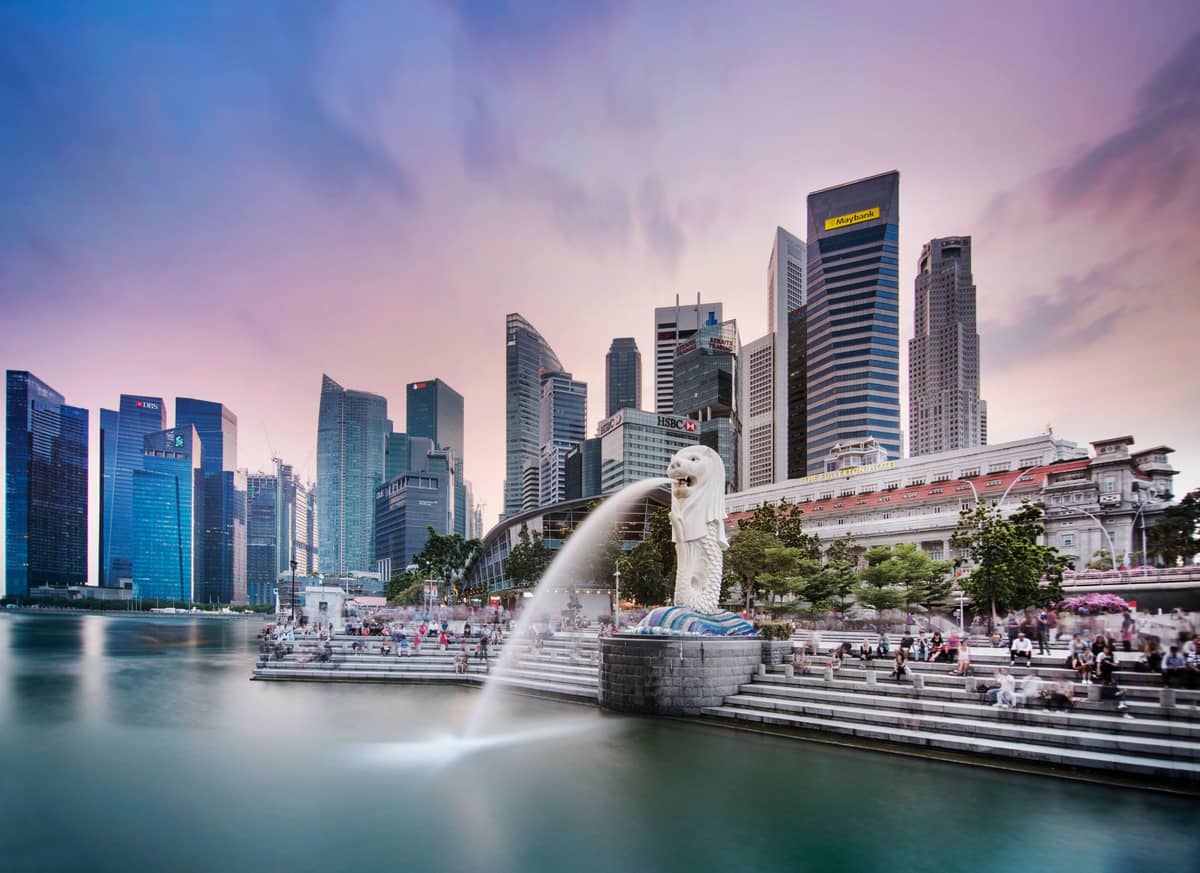
For companies listed on the Singapore Exchange (SGX), the mandatory climate disclosure framework is no longer something on the horizon, it is already in effect. Unlike Vietnam's approach of layering requirements across multiple pieces of legislation, Singapore has taken the path of embedding ISSB-aligned climate disclosure requirements directly into the SGX Listing Rules, jointly developed and updated by Singapore Exchange Regulation (SGX RegCo) and the Accounting and Corporate Regulatory Authority (ACRA). This article summarizes the latest roadmap, updated by ACRA and SGX RegCo in August 2025, to help listed companies understand exactly where their obligations stand.
Legal Framework: ISSB Embedded via Listing Rules, Not a Standalone Law
On 28 February 2024, ACRA and SGX RegCo first published details of mandatory Climate-related Disclosure (CRD) requirements applicable to listed companies and large non-listed companies. The framework is based on two standards issued by the International Sustainability Standards Board (ISSB): IFRS S1 (general sustainability-related disclosures) and IFRS S2 (climate-related disclosures). Singapore did not directly transpose IFRS S1/S2 into law; instead, it embedded the core requirements into the SGX Listing Rules (specifically Listing Rules 711A and 711B), while ACRA separately governs the large non-listed company segment.
On 25 August 2025, ACRA and SGX RegCo announced a significant adjustment: extending most implementation timelines (including external assurance requirements) to give companies more time to build reporting capabilities, following feedback from the Singapore Business Federation (SBF) that smaller listed companies needed more time to prepare.
Implementation Timeline: Three Tiers Based on Market Capitalisation
Under the updated framework, listed companies are grouped into three tiers based on market capitalisation:
Straits Times Index (STI) constituents
Non-STI constituents with market capitalisation of S$1 billion and above
Non-STI constituents with market capitalisation below S$1 billion
Specific disclosure obligations by tier:
Scope 1 and Scope 2 GHG emissions: mandatory for all listed companies from FY2025 (for financial years commencing on or after 1 January 2025). This is the only timeline that was not extended in the August 2025 revision, as this data has a clearly defined scope and is the most straightforward to standardize.
Scope 3 GHG emissions: mandatory for STI constituents from FY2026. For non-STI listed companies, this requirement has been shifted to voluntary until further notice, rather than becoming mandatory across the board from 2026 as originally planned.
Other ISSB-based climate-related disclosures (beyond GHG emissions, covering governance, strategy, risk management, and climate-related metrics and targets): mandatory for STI constituents from FY2025; non-STI constituents with market capitalisation of S$1 billion and above from FY2028 (deferred from the original plan); non-STI constituents with market capitalisation below S$1 billion from FY2030.
External limited assurance for Scope 1 and 2 GHG emissions: deferred to FY2029 for all listed companies.
Large Non-Listed Companies Are Also Within Scope
One notable point is that Singapore's climate disclosure framework is not limited to listed companies. ACRA separately governs "Large Non-Listed Companies" (Large NLCos), defined as companies meeting both of the following criteria: annual revenue of S$1 billion and above, and total assets of S$500 million and above, assessed based on the two financial years immediately preceding the current financial year.
Under the August 2025 revised roadmap, this group has been given considerably more time to prepare compared to the original plan (which had targeted FY2027 as the start date):
ISSB-based climate-related disclosures (including Scope 1 and 2) deferred to FY2030.
Scope 3 GHG emissions reporting remains voluntary until further notice.
External limited assurance deferred to FY2032.
Companies in this group may be exempted if their parent company (local or foreign) already prepares climate or sustainability reports using ISSB-based standards or equivalent standards, and the company's activities are reflected in the parent's publicly available report.

Disclosure Timing and Its Link to the Annual Report
Under current requirements, from FY2026, listed companies must issue a sustainability report at the same time as their annual report. However, if a company has conducted external assurance on its sustainability report, the disclosure deadline can be extended by up to five months after the end of the financial year. This differs from Vietnam's approach, where ESG reports are typically integrated with or accompany the annual report without a clearly defined extension mechanism tied to assurance.
Disclosure Timing and Its Link to the Annual Report
Under current requirements, from FY2026, listed companies must issue a sustainability report at the same time as their annual report. However, if a company has conducted external assurance on its sustainability report, the disclosure deadline can be extended by up to five months after the end of the financial year. This differs from Vietnam's approach, where ESG reports are typically integrated with or accompany the annual report without a clearly defined extension mechanism tied to assurance.
What Should Singaporean Listed Companies Do Now?
Identify the correct tier your company falls into (STI, non-STI with market cap ≥S$1 billion, or non-STI with market cap below S$1 billion), as obligations and timelines differ across tiers.
Prioritize finalizing Scope 1 and 2 emissions data now, as this is the only milestone that was not extended and has applied since FY2025.
Start preparing early for external limited assurance, even though it has been deferred to FY2029, since building a data system reliable enough for audit takes time.
Monitor further announcements on Scope 3 for non-STI companies closely, as this requirement is currently voluntary but subject to change.
Consider tapping into the Sustainability Reporting Grant, co-funded by the Singapore Economic Development Board (EDB) and Enterprise Singapore, which covers part of the cost of preparing ISSB-aligned reports.
Assess the feasibility of issuing an assured sustainability report to take advantage of the five-month extension mechanism, rather than having to disclose simultaneously with the annual report.
Singapore's climate disclosure roadmap reflects a cautious but clearly directed approach: closely tied to the international ISSB standards, tiered according to companies' actual readiness, and flexibly adjusted based on market feedback. For listed companies in Singapore, particularly non-STI companies approaching mandatory milestones between 2028 and 2030, now is the time to start building reporting capabilities rather than waiting until the deadline approaches.
Partner with FTK Global to build a climate disclosure and sustainability reporting roadmap aligned with each compliance milestone under the SGX and ACRA ISSB framework. The specialized ESG reporting platform Aegis, developed by Forthekids (FTK) offers a full Scope 1-2-3 measurement feature. Businesses can confidently digitize and standardize all emission data the most accurate way, ready to meet both regulatory requirements and the growing expectations of international investors.
#ESG #SustainabilityReporting #ClimateDisclosure #SGX #ISSB #IFRSS2 #ACRA #ListedCompanies #Singapore #FTKGlobal #CorporateGovernance