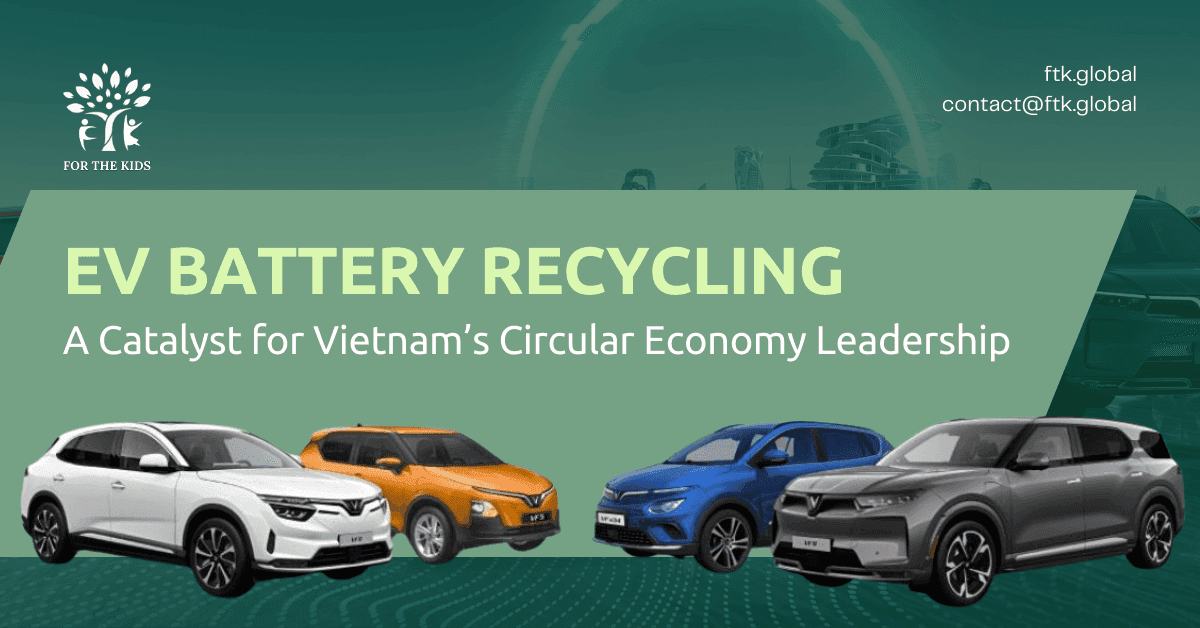
Vietnam’s rapid shift to electric vehicles will lead to millions of end-of-life EV batteries needing proper treatment in the coming decades. Forecasts suggest the number will rise from around 2 million batteries in 2030 to over 5 million by 2040. This presents not only a pressing environmental challenge but also a high-value recycling industry opportunity.
Ho Chi Minh City plans to develop an EV battery recycling center with a capacity of 3,000 tons per year, capable of recovering up to 95% of precious metals such as nickel, cobalt, and manganese. This initiative not only reduces hazardous waste but also recovers scarce resources, reducing reliance on raw material extraction. At the same time, Vietnam’s Extended Producer Responsibility (EPR) policy incentivizes companies to invest in recycling infrastructure through environmental fee exemptions.
In addition, the partnership between VinES (Vingroup) and Li-Cycle (USA) is introducing the modern “Spoke & Hub” technology to Vietnam, enabling near-total recovery efficiency and accelerating industrial-scale deployment. Beyond recycling, many companies are repurposing used batteries for energy storage systems in factories or solar power applications, creating added value while contributing to emission reduction goals.
With advanced technology, robust policy frameworks, and circular business models, Vietnam has the potential to establish itself as ASEAN’s EV battery recycling hub, making a significant contribution to the circular economy and green growth objectives.
#EVBatteryRecycling #CircularEconomy #EPR #GreenTech #VietnamESG #Sustainability #BatteryRecyclingHub